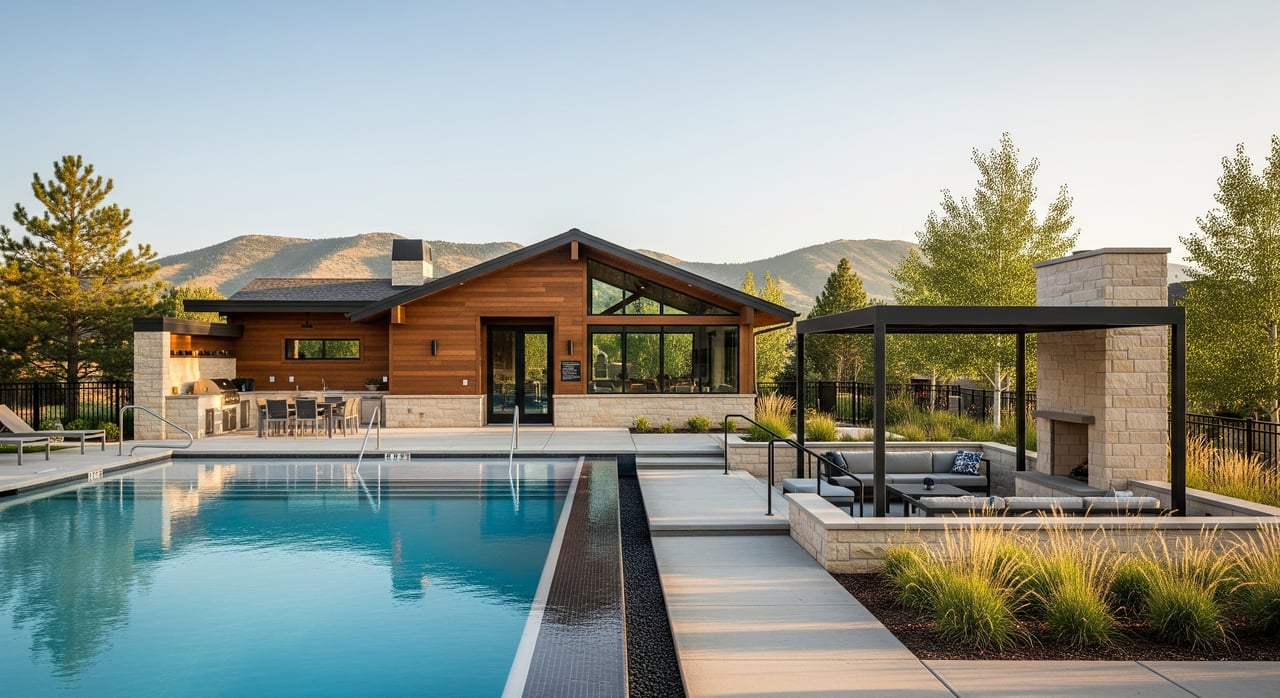
Are the pool, gym, and snow removal worth the monthly dues? If you are comparing condos and townhomes in Lakewood, it is smart to ask what HOA amenities actually add to your daily life, budget, and long-term value. You want convenience without overpaying, and you want a community that will hold up well over time. This guide breaks down common amenities, how they affect HOA dues, what they mean for resale, and the exact documents to request before you buy. Let’s dive in.
HOA amenities in Lakewood
Lakewood offers a wide mix of communities, from low-rise townhomes to mid- and high-rise condos. Amenity sets vary by building type and age. Newer or luxury buildings usually include more shared features and services.
- Outdoor amenities: community pools, landscaped courtyards, BBQ areas, private greens, trail connections, and dog areas.
- Indoor/shared spaces: small fitness rooms, clubhouses and party rooms, coworking or business centers in newer buildings, and storage or bike rooms.
- Services and maintenance: exterior maintenance, snow removal, trash and recycling, common area cleaning, and professional property management.
- Security and access: controlled entry, gated access in larger complexes, exterior lighting, and camera systems in some luxury properties.
- Parking and transportation: assigned or covered parking, garages, guest parking, and EV charging in newer or retrofitted buildings.
- Recreational and lifestyle: hot tubs, saunas, laundry rooms where not in-unit, playgrounds, and package handling in higher-service buildings.
Lakewood’s climate and outdoor culture influence demand. Snow removal and seasonal pool operations matter in winter and summer. Proximity to trails, open space, and RTD transit boosts the value of bike storage, secure parking, and pet-friendly features.
Building type and amenity costs
Different building types tend to offer different amenities, and that shapes dues.
Low-rise townhomes
Expect the essentials: exterior maintenance, landscaping, snow removal, and trash. Some have small greens or playgrounds. Overhead is lower than mid- or high-rise condos.
- Typical dues often under the $200 to $300 per month range for lower-amenity associations.
Mid-rise condos
These commonly add fitness rooms, clubrooms, secure lobbies, and pools. Shared utilities and staffing contracts raise operating costs.
- Typical dues often fall in the $250 to $600 per month range, depending on what is included.
High-rise or luxury condos
Concierge services, heated pools, structured parking, and complex HVAC or elevator systems add cost and reserve needs.
- Dues can exceed $600 per month and can approach $1,000 or more in full-service buildings.
How amenities shape HOA dues
Amenities drive costs in predictable ways. Understanding those drivers helps you compare properties fairly.
- Utilities: pools, hot tubs, elevators, and common-area HVAC and lighting raise the shared utility bill.
- Staffing and contracts: concierge, janitorial, grounds, snow removal, pool service, and fitness equipment maintenance are recurring expenses.
- Capital replacements: roofs, pools, paved surfaces, elevators, parking decks, and HVAC systems require major periodic repairs or replacement that come from reserve funds.
- Insurance: larger shared spaces and complex systems increase master policy costs.
- Compliance and safety: pools and similar facilities require inspections, permits, and safe operations.
What dues include vs your bills
Always check what your dues cover, and what you pay separately.
- Commonly included: exterior maintenance, common area utilities, snow removal, trash and recycling, and master insurance for shared areas and structure.
- Often separate or variable: in-unit utilities like electricity, heat, and water in some buildings, internet or cable, EV charging electricity, and individual HVAC servicing.
Clarify inclusions before you compare two listings. A higher fee that covers heat and water can be easier on your monthly budget than a lower fee that leaves those costs to you.
Resale impact in Lakewood
Amenities can help or hurt resale, depending on the match between the building and the buyer pool.
- Positive: fitness rooms, secure parking, pet and bike amenities, and trail access often broaden appeal and can support stronger pricing. Well-kept amenities signal good management.
- Neutral or negative: very high dues shrink the buyer pool. Amenities that do not match buyer priorities add cost without perceived value. Deferred maintenance is a red flag.
Buyer segments vary:
- First-time and cost-conscious buyers often prioritize lower dues, essential maintenance, and included utilities.
- Young professionals value gyms, secure parking and bike storage, transit access, and social spaces.
- Families value outdoor space, playgrounds, and trail access.
- Downsizers value low-maintenance living, accessible features like elevators, and simple services.
- Investors focus on dues level, reserve health, rental rules, and assessment history.
Compare two similar units the right way
A fair comparison looks at total monthly cost, not dues in isolation. Use a simple framework when you analyze two properties.
- Start with your mortgage payment at the price you would offer.
- Add monthly HOA dues.
- Add any HOA-covered utilities, if not included in dues, and your private utilities.
- Add property tax and owner’s insurance, plus HO-6 coverage for a condo, as required.
- Consider reserve health and the likelihood of future special assessments.
If one building offers higher dues but covers heat, water, and robust reserves, it may still be the better long-term choice than a low-dues building facing deferred maintenance.
Buyer due diligence checklist
Before you make an offer, request and review the full resale package and financials. Careful review can prevent surprises later.
Documents to request
- Current HOA resale packet with budget, CC&Rs, bylaws, rules, meeting minutes, insurance info, and assessment history.
- Latest operating budget and profit and loss statement.
- Current reserve study and reserve balance.
- List of pending or approved special assessments.
- Board meeting minutes for the past 6 to 12 months.
- Master insurance declarations and what the policy covers.
- Rules for rentals, short-term rentals, pets, parking, and architectural control.
- Management contract if an outside manager is used.
- Records of recent capital projects, such as roof, pool, parking deck, or elevator work.
Key items to analyze
- Dues inclusions: which utilities and services are bundled.
- Reserve adequacy: compare balances to study recommendations.
- Assessment history: repeated assessments can signal underfunding.
- Litigation: any pending lawsuits are a risk factor.
- Occupancy mix: owner-occupied versus rentals can affect lending and resale.
- Maintenance quality: visible deferred work often predicts future increases.
Questions to ask
- How much have dues increased over the past 3 to 5 years, and why?
- What capital projects are planned in the next 1 to 5 years, and at what cost?
- What is your unit’s share of any current or upcoming assessment?
- Are there transfer or estoppel fees, and who pays them?
- How is snow removal prioritized, including walkways and drives?
Red flags to watch
- Low reserves versus estimated needs, or no recent reserve study.
- Repeated or large assessments without a corrective plan.
- High owner delinquency rates.
- Significant unresolved lawsuits or liens.
Lakewood living factors to weigh
- Trails and open space: proximity to Jefferson County Open Space and local trails is a major perk. Buildings with direct trail access or easy connections are popular with outdoor-focused buyers.
- Snow and seasonal care: reliable snow removal and well-maintained heating systems carry real value in winter months.
- Transit and commuting: access to RTD lines and major roads like Wadsworth, Colfax, and Alameda increases the value of secure parking, bike storage, and guest parking.
- Family-friendly features: in certain neighborhoods, playgrounds and greens can make day-to-day living easier and more enjoyable.
Smart budgeting steps
- Set a target total monthly housing cost that includes the HOA.
- Use a side-by-side worksheet for at least three properties.
- Note what each HOA covers and the age of major systems.
- Stress test your budget for a 5 to 10 percent dues increase.
- Favor associations with recent reserve studies and clear project plans.
When more amenities make sense
Choose a higher-amenity building when you will use the features often and when the association shows strong financial management. That includes updated reserve studies, clear maintenance schedules, and a track record of steady, justified dues adjustments. If you are unlikely to use the gym or pool, or if reserves look thin, a simpler townhome community may deliver better value.
Ready to find the right fit?
You deserve a home that matches your lifestyle and your budget. If you want help comparing HOA packages, reading reserve studies, or weighing resale risks, let’s talk. Schedule a consultation with Greg Drake to find the right Lakewood condo or townhome, at the right price and with the right amenities.
FAQs
What HOA amenities are most common in Lakewood condos and townhomes?
- You will often see seasonal pools, small fitness rooms, clubhouses, landscaped greens, snow removal, trash service, and some form of controlled access or assigned parking.
How do HOA amenities affect dues and monthly costs in Lakewood?
- More amenities add utilities, staffing, insurance, and reserve needs, which typically raises dues and the chance of special assessments if reserves are underfunded.
What are typical HOA fee ranges for Lakewood condos and townhomes?
- Lower-amenity townhome dues often run under $200 to $300, mid-amenity condos commonly range from $250 to $600, and high-amenity buildings can exceed $600 per month.
Which utilities are usually included in HOA dues for Lakewood buildings?
- Associations often cover exterior maintenance, common utilities, snow removal, trash, and master insurance, while in-unit utilities and internet are frequently separate.
How do HOA amenities impact resale value for Lakewood buyers and sellers?
- Well-matched, well-maintained amenities can widen the buyer pool and support pricing, but very high dues or deferred maintenance can limit demand and reduce value.
What HOA documents should I review before buying a Lakewood condo or townhome?
- Request the resale packet, current budget and financials, reserve study and balance, assessment history, recent board minutes, master insurance, and rules on rentals, pets, and parking.